Distinctive expertise
Develop high-quality professional education around acupuncture, clinical relevance and responsible knowledge exchange.
Grounded in traditional Chinese veterinary medicine and oriented toward the real needs of the modern equine industry, we build a professional platform integrating research, teaching, achievement transformation, and industry exchange.
Henan Equine Traditional Chinese Veterinary Medicine Research Institute was established in December 2022, relying on the industrial resources of Zhengzhou Saike Pharmaceutical Technology Co., Ltd. and the research and teaching strengths of the Traditional Chinese Veterinary Medicine Teaching and Research Office of Henan University of Animal Husbandry and Economy, deeply cultivating the field of equine traditional Chinese veterinary medicine.
The institute has always upheld the core mission of "inheriting excellent Chinese culture, upholding the classics of Chinese veterinary medicine, and promoting the healthy development of the equine industry," rooted in the Central Plains and radiating across the country, while conducting professional exchange and cooperation with relevant industry institutions and individuals in Hong Kong, Macao, Taiwan, and overseas.
Core business focuses on equine traditional Chinese veterinary medicine cultural inheritance, academic research, theoretical innovation, ancient text collation, achievement transformation, industry exchange, standards research, and industrial empowerment, exploring innovative applications of traditional Chinese veterinary medicine in the modern equine industry.
The institute brings together experts from the Traditional Chinese Veterinary Medicine Branch of the Chinese Association of Animal Science and Veterinary Medicine, the Equine Veterinary Branch of the Chinese Veterinary Medical Association, and multiple universities, providing professional support for the high-quality and sustainable development of the industry.
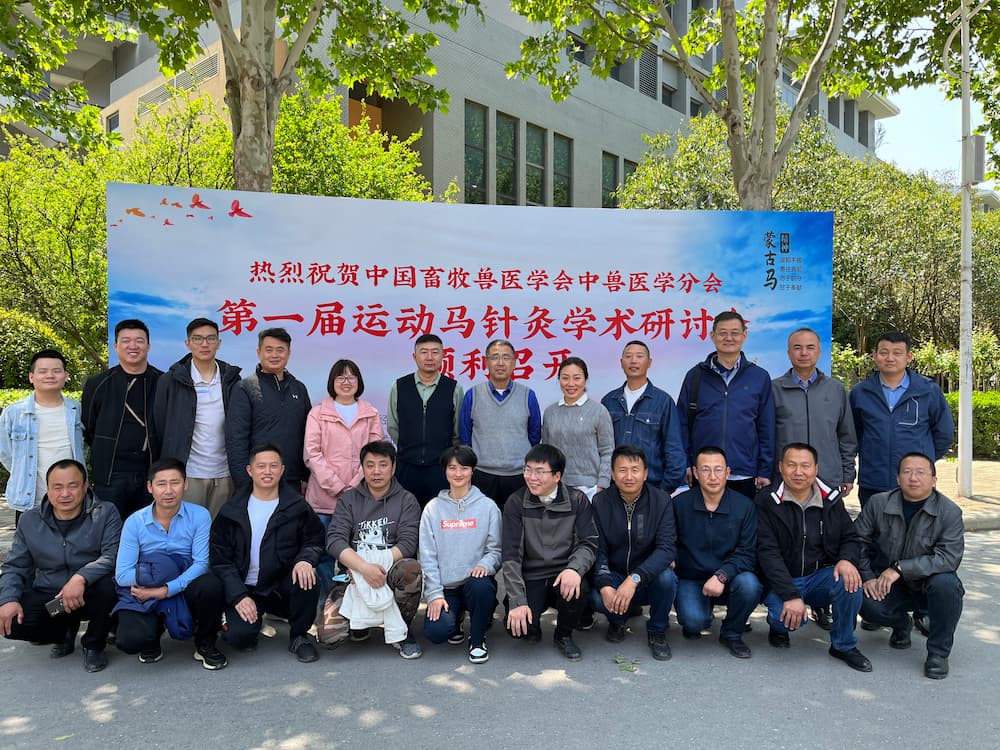
Professionalism, integrity and long-term collaboration connect traditional knowledge with contemporary equine practice.
Develop high-quality professional education around acupuncture, clinical relevance and responsible knowledge exchange.
Based in Zhengzhou, serving Henan and engaging nationally and internationally as a trusted platform for research, education and professional practice.
One Needle for a Millennium: The Legacy of Equine Veterinary Medicine in the Central Plains
— Brand Story of Henan Province Equine Traditional Chinese Veterinary Medicine Research Institute
Guo Xin
Introduction: One Needle Saves a 'Ferghana Horse'
Shangqiu, Yuwen Tuo's horse farm.
A purebred Ferghana horse strained its right hind leg during transport and could no longer run, dragging its hind leg. The farm owner, veterinary station, and Western medicine plans were all exhausted, yet the swelling persisted and walking remained heavy. Yuwen Tuo was frantic—this precious horse, which he treasured, was on the verge of being completely ruined.
A Douyin video became the turning point. In the video, a young traditional Chinese veterinary doctor was diagnosing and treating cattle and horses, using inspection, auscultation, inquiry, and palpation, and performing acupuncture and moxibustion with fluid skill. With the mindset of 'treating a dead horse as if it were alive,' Yuwen Tuo dialed the phone number.
At 4 PM on May 14, 2023, Wang Xuefei drove from Zhengzhou to the Shangqiu horse farm. He squatted down, opened the horse's mouth to check the tongue color, pressed acupoints to check reactions, and then took out silver needles—Baihui, Bashan, Huantiao, Dakuai, Xiaokuai, Housanli—placing each needle precisely.
That night, Yuwen Tuo sent a message: before the medicine was even fetched, the horse could already walk normally.
The next morning, the voice on the phone trembled with excitement: 'Teacher Wang, my precious horse has fully recovered!'
This is not a scene from a martial arts novel, but a true event that happened in the Central Plains. The person who created this miracle is Wang Xuefei, founder of the Henan Province Equine Traditional Chinese Veterinary Medicine Research Institute.
1. Origin: A Scholar Who Grew Up on Horseback on the Grasslands
Wang Xuefei was born on the Inner Mongolian grasslands.
In his childhood memories, horses were not distant scenery in a zoo, but companions he lived with daily. Children on the grasslands grow up understanding what a horse's gaze, breath, and every flick of its tail mean. That innate closeness, like the wind on the grasslands, is etched into his very bones.
From the day he graduated with a PhD in Clinical Veterinary Medicine from Inner Mongolia Agricultural University, Wang Xuefei chose a path few take—traditional Chinese veterinary medicine (TCVM).
This is not an easy choice.
TCVM is currently the only traditional veterinary medicine in the world that retains a complete and independent theoretical system. It carries the life wisdom of 'harmony between heaven and humanity' from China's five thousand years of civilization. However, when Wang Xuefei delved deep into the industry, he saw a worrying gap:
'Now TCVM practitioners are all old veterinarians over 60, and the generation between 40 and 60 has basically broken the transmission. Only four universities nationwide offer undergraduate TCVM programs, and equine veterinarians of my age who both understand TCVM theory and can perform clinical treatments are very rare nationwide.'
This is a crisis of unfathomable depth. The experience of the older generation of veterinarians is being lost with time, while the younger generation knows little about this ancient craft. If no one takes up this silver needle, the acupuncture points, herbal formulas, and diagnostic approaches passed down through generations will truly become 'words in ancient texts.'
Wang Xuefei could not sit still.
He began to 'race against time' in his own way—going to fields, farms, horse ranches, and clubs, proving the value of TCVM with real clinical cases. He treated pigs for high fever, needled cattle, set bones for horses, and with funding from Zhengzhou Saike Pharmaceutical, completed experimental research on over 1,000 pigs in six batches, summarizing a complete TCVM diagnostic theory and herbal formulas. This alone brought the company sales of over 50 million yuan.
The deeper he practiced, the more firmly he believed: TCVM cannot rely on one person or one needle fighting alone. It needs a platform—a platform that can systematically organize the wisdom of our ancestors, pass it down through generations, and bring it to the world.
2. Founding: 2022, a Clarion Call on the Central Plains
December 2022, Zhengzhou.
With the support of Henan University of Animal Husbandry and Economy, and in collaboration with Zhengzhou Saike Pharmaceutical Technology Co., Ltd., the Henan Province Equine Traditional Chinese Veterinary Medicine Research Institute was officially established.
This is not a simple institutional registration. In an era when TCVM transmission is in short supply, and when the horse industry is developing rapidly but lacks a local health system, it is more like a clarion call—
'Inherit the excellent culture of China, uphold the classics of Chinese veterinary medicine, and promote the healthy development of the horse industry.'
These 24 characters are both a mission and a commitment.
The institute is based in the Central Plains and faces the world. Henan, a land known as 'the heart of the nine provinces and the thoroughfare of ten,' is not only an important birthplace of Chinese civilization but also a deep soil for Chinese horse culture. From ancient post stations to modern cavalry, from draft horses in the agricultural era to sport horses in modern equestrian sports, the bond between horses and this land stretches for thousands of years. Choosing to practice equine TCVM in the Central Plains is itself a cultural return.
The institute follows a path of integrating industry, academia, research, and application—
University support: Collaborating with Henan University of Animal Husbandry and Economy, and gathering TCVM experts from Nanjing Agricultural University, Inner Mongolia Agricultural University, and other institutions;
Guidance from academic societies: Conducting academic research and talent training under the professional guidance of the TCVM Branch of the Chinese Association of Animal Science and Veterinary Medicine;
Industry collaboration: Working with the Henan Equestrian Association and equestrian clubs across the region to bring laboratories to the front lines of horse farms;
Enterprise empowerment: Deep cooperation with companies like Saike Pharmaceutical to promote the industrialization of research outcomes.
This is not an 'ivory tower' doing closed-door research, but a 'horse veterinary community' rooted in the industry, serving the front lines, and connecting past and present.
3. Upholding Tradition: Bringing Ancient Texts to Life
The roots of TCVM lie in ancient texts.
The Huangdi Neijing speaks of 'treating before illness occurs,' the Qimin Yaoshu records numerous remedies for cattle and horses, and the Simu Anji Ji and Yuanheng Liaoma Ji are classics of Chinese equine medicine. Every acupoint, every herb, and every diagnostic approach in these ancient texts is the crystallization of wisdom that generations of TCVM practitioners obtained through blood and tears in practice.
After its establishment, the first thing the institute did was to 'dig into ancient texts.'
They systematically organized classic literature on equine TCVM, brought the diagnostic and treatment experiences left by ancestors out of the dusty tomes, and reinterpreted, verified, and standardized them in the language of modern medicine. This is not simple 'retro,' but letting wisdom that has slept for a thousand years 'come alive' again in contemporary horse farms.
In clinical practice, the institute adheres to the complete TCVM diagnostic system of 'inspection, auscultation, inquiry, and palpation':
Inspection: Observing the horse's demeanor, tongue color, gait, and coat;
Auscultation: Listening to the horse's breathing, bowel sounds, and wheezing;
Inquiry: Asking the owner about feeding management, training intensity, and medical history;
Palpation: Feeling the pulse, touching acupoints, and pressing to diagnose, determining the rise and fall of qi and blood in the meridians.
Animals cannot speak, so everything depends on the practitioner's skill and experience. Wang Xuefei often says, 'Treating animals is several times harder than treating people.' It is this reverence that ensures every diagnosis and treatment at the institute is done with utmost care.
4. Innovation: Ancient Formulas for Modern Use, Anji Has Methods
Inheritance does not mean conservatism. The other leg of the institute is 'innovation.'
They combine ancient TCVM theory with modern technology to develop a series of herbal products targeting common issues in sport horses such as tendon and bone injuries, post-operative recovery, and chronic strain—
The 'Anji Formula' series is the institute's labor of love.
'Ji' means a fine horse. The name 'Anji' comes from the meaning 'bringing peace and health to fine horses.'
Anji Formula·Xiao: For post-race leg swelling and traumatic injuries in sport horses, it activates blood circulation and unblocks meridians, relieving symptoms in three steps;
Anji Formula·Tong: Unblocks meridians, strengthens tendons and bones, used for daily maintenance and injury prevention;
Antiseptic and Tissue-Generating Powder: For external use, it removes necrotic tissue and promotes tissue regeneration for wounds;
Taohua Powder: An improved traditional formula, significantly effective for skin conditions.
Behind these products is the institute's deep understanding of TCVM's advantages of being 'simple, convenient, effective, and inexpensive'—Chinese herbal medicines come from nature, have no exogenous hormone residues, and are less likely to cause drug resistance. They not only meet the modern equestrian sports' pursuit of green health but also align with the global livestock industry's trend of 'reducing and limiting antibiotics.'
From the 'Anji remedies' in ancient texts to today's 'Anji Formula' brand, what has changed is the dosage form and technology; what remains unchanged is the original intention of 'relieving horses' ailments.'
5. Education: Passing on Ancient Equine Medical Arts, Nurturing Talents
More important than developing products is people.
Wang Xuefei sees clearly: no matter how large an institute is, it cannot contain the needs of the entire industry. True inheritance is to let more people master this craft, so that the silver needle is not held only by a few.
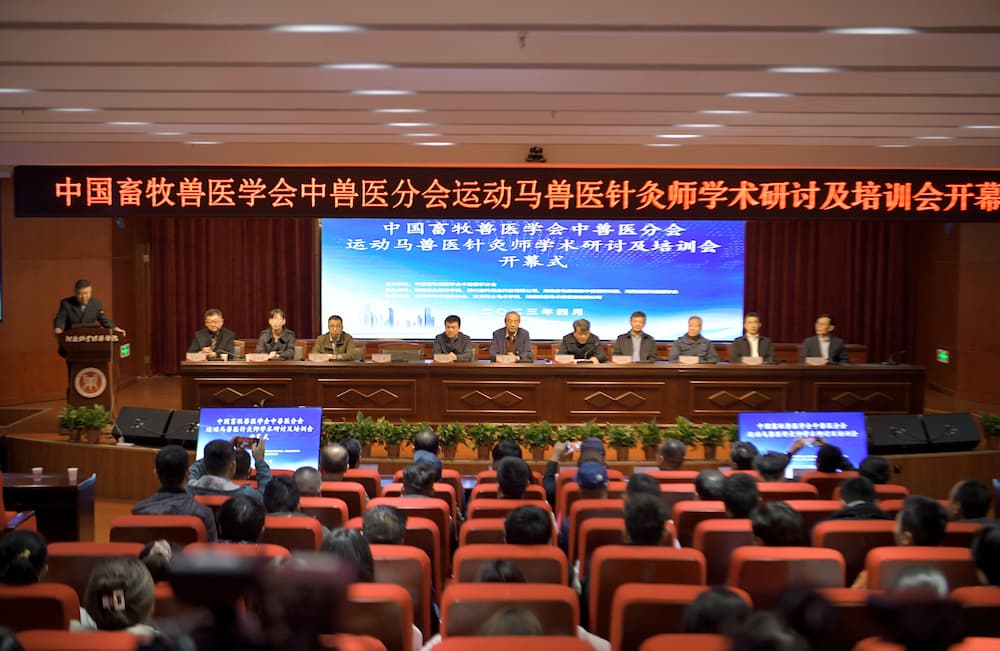
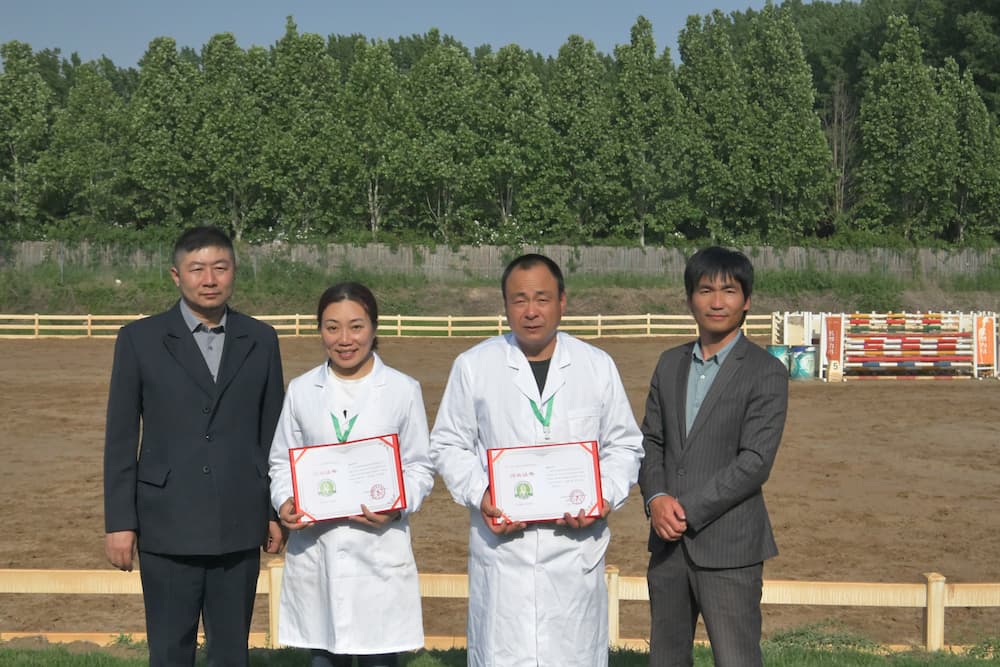
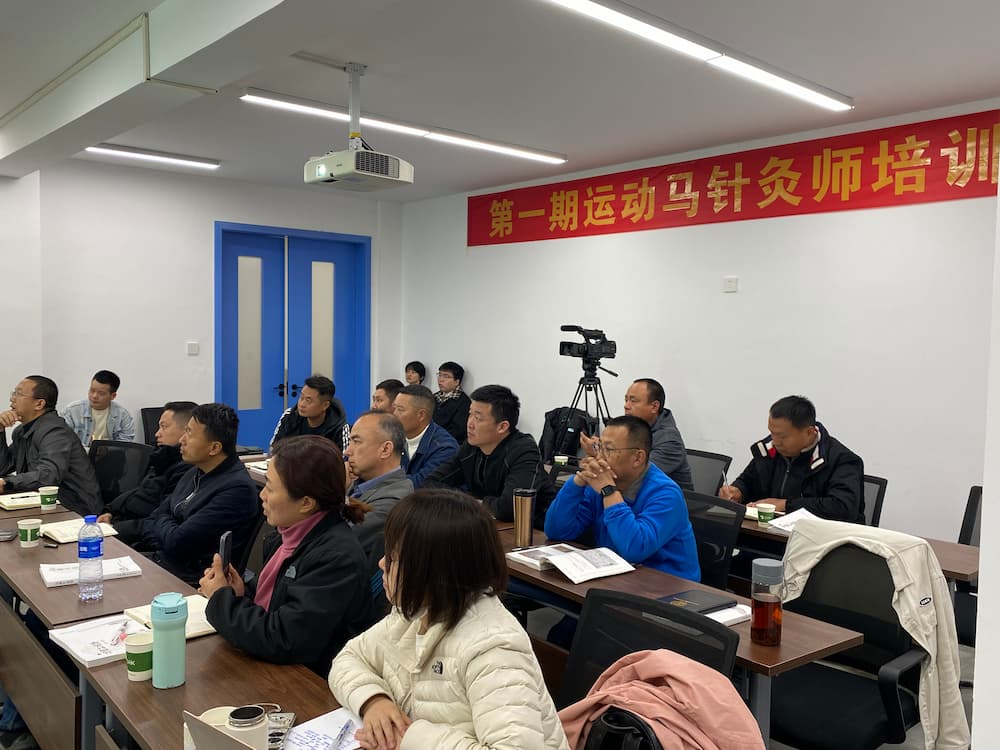
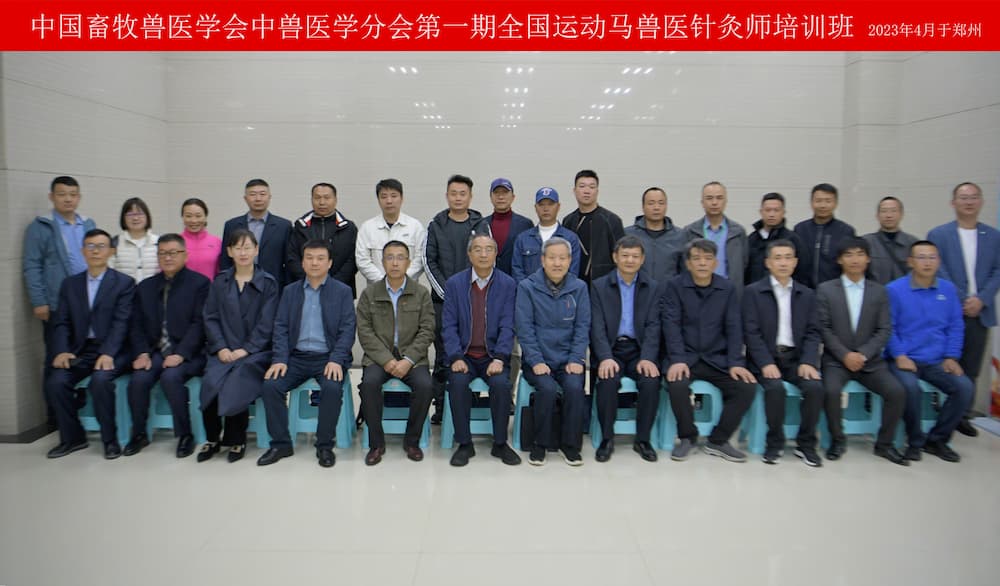
Thus, under the guidance of the TCVM Branch of the Chinese Association of Animal Science and Veterinary Medicine, the institute began hosting the 'National Sport Horse Veterinary Acupuncture Inheritance Training Course.'
This is not an ordinary 'attend lectures and get a certificate' course.
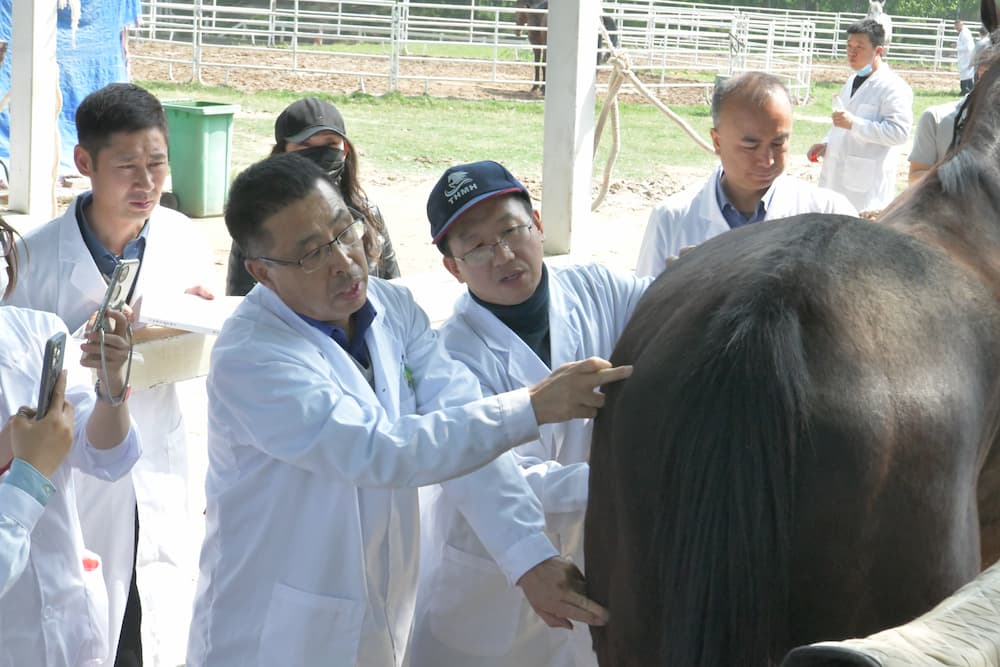
Each training session invites top experts—Professor Mu Xiang, Chairman of the TCVM Branch of the Chinese Association of Animal Science and Veterinary Medicine; Professor Liu Zhongjie of China Agricultural University; Professor Yang Ying of Inner Mongolia Agricultural University; Professor Liu Jiaguo of Nanjing Agricultural University... These scholars, who have devoted decades to TCVM, personally teach and provide on-site guidance.
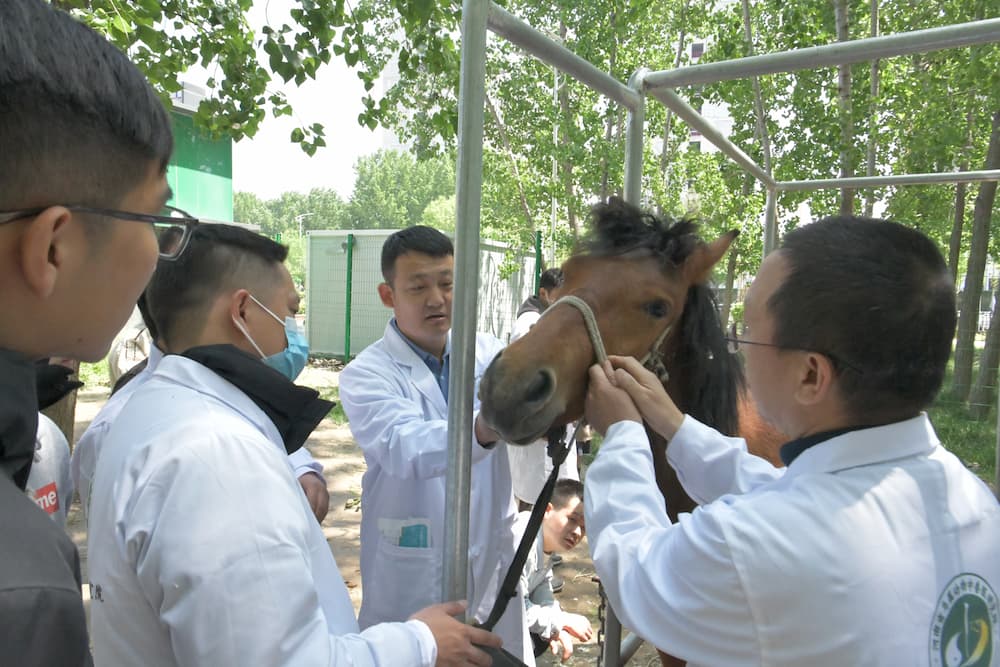
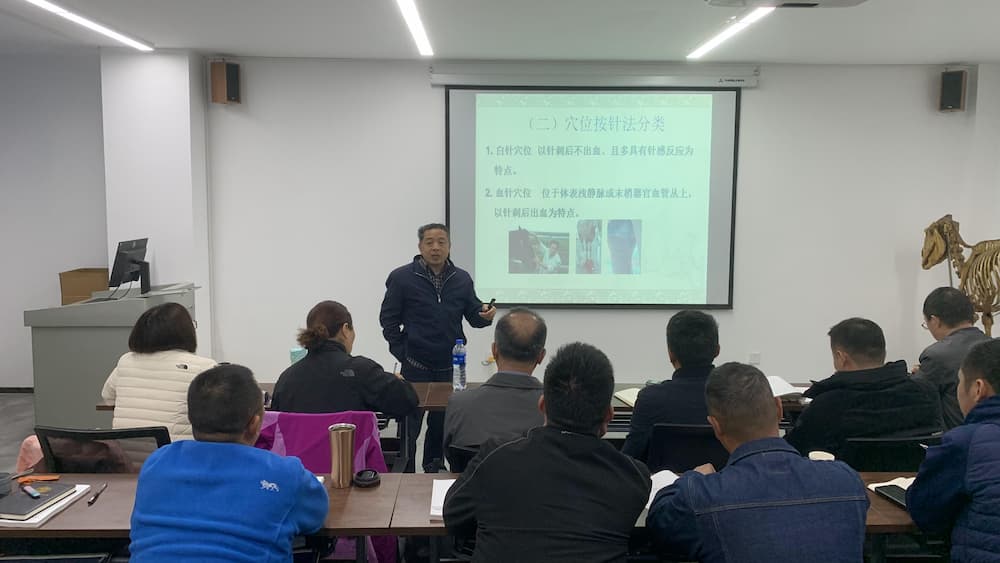
Participants come from all over the country—horse farm owners, equestrian coaches, frontline stable workers, and grassroots veterinarians. They come with real clinical puzzles and learn practical skills they can apply immediately: acupuncture point combinations, diagnostic approaches, herbal formula applications, and maintenance plans...
To date, the training course has reached itseighthsession.
In addition, the institute offers diverse learning platforms such as the 'Sport Horse Pre-Purchase Examination and Radiology Training Course' and the 'Silver Needle Forum'practiceonline forum, spreading the seeds of equine TCVM to horse farms, clubs, and breeding front lines across the country.
'Pass on ancient equine medical arts, nurture talents.'
These eight characters are written on the opening screen of every training session and engraved in the institute's mission.
6. Outlook: Rooted in the Central Plains, Facing the World
Today, the Henan Province Equine Traditional Chinese Veterinary Medicine Research Institute has grown from a seed into a small tree.
It has a clear business scope—horsehealthmanagement guidance, TCVM disease prevention and treatment, health care, acupuncture diagnosis and treatment, ancient text organization, academic exchange, talent training, and product research and development, forming a complete service chain.
It has a stable cooperation network—universities, academic societies, associations, enterprises, and horse farms, working together in industry-academia-research-application synergy.
It has a growing talent pipeline—with Dr. Wang Xuefei as the core, gathering a group of young and middle-aged TCVM talents who have both theoretical foundations and clinical capabilities.
But this is not enough.
In today's world, equestrian sports are booming, yet Western veterinary medicine still dominates. TCVM, as the only traditional veterinary medicine in the world with a complete theoretical system, has far from fully recognized and applied value.
The institute's gaze has already gone beyond the Central Plains to the wider world—
They hope to build a world-class Chinese horse industry health system integrating research, promotion, application, and training;
They hope to let China's silver needle penetrate the map of global equestrian sports;
They hope to make TCVM brands like 'Anji Formula' a Chinese calling card in the global horse health field;
They hope even more that one day, when people talk about horse health, the first thing they think of is not some Western drug, but wisdom from the East—
One needle for a millennium, Anji has methods.
Epilogue
On the wall of Wang Xuefei's office hangs a calligraphy piece: 'Inspection, Auscultation, Inquiry, and Palpation to Treat Cattle and Horses.'
That is his daily work and the spiritual portrayal of the institute.
From the child on the grasslands who accompanied horses to the scholar who now carries the banner of equine TCVM inheritance; from hanging that plaque in Zhengzhou in the winter of 2022 to today when participants of the seventh training course are spread across the country—the path walked by the Henan Province Equine Traditional Chinese Veterinary Medicine Research Institute is actually just one path:
Take the wisdom of our ancestors, pass it on, and go global.
This path is long, but as long as there are horses running, people who love horses, and people willing to calm down and read a herbal formula in an ancient text, this silver needle will not break.
In the Central Plains, equine veterinary inheritance is happening now.
Guo Xin
Henan Province Equine Traditional Chinese Veterinary Medicine Research Institute
Inherit the excellent culture of China · Uphold the classics of Chinese veterinary medicine · Promote the healthy development of the horse industry
A clear structure connects academic guidance, technical work and operational support.
Authentic moments from academic meetings, professional education and practical equine training.